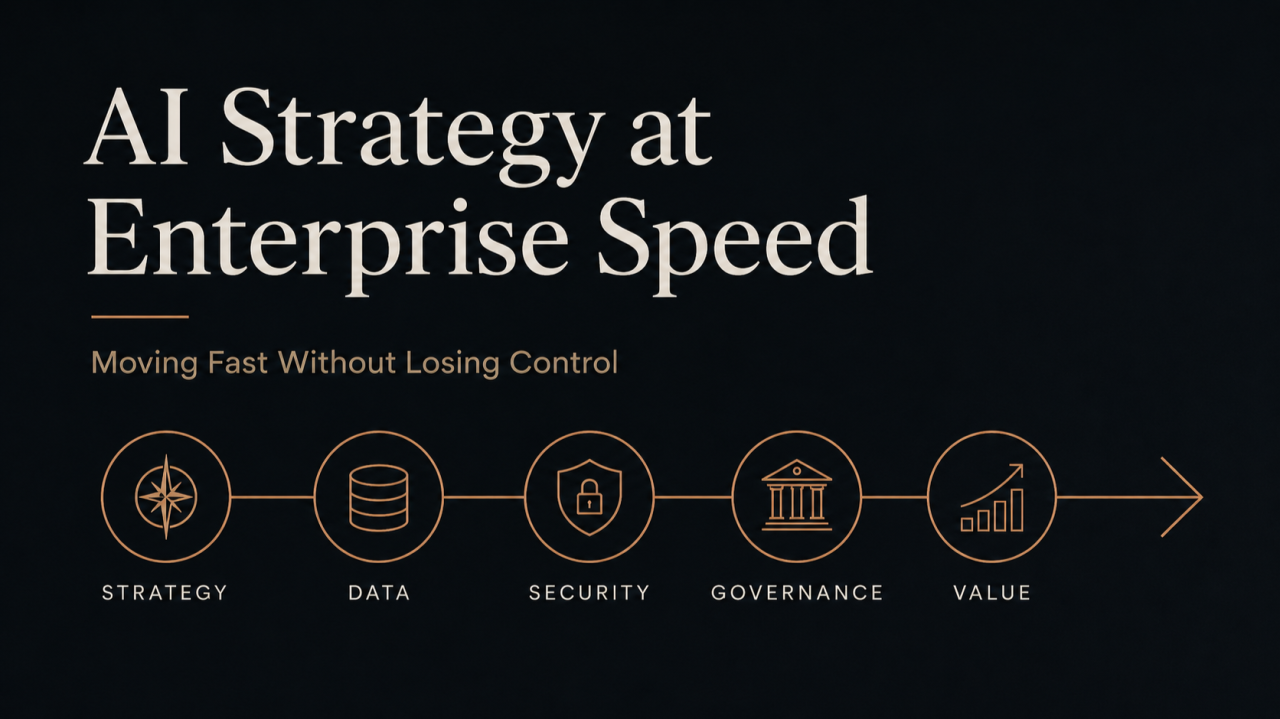
Agents are showing up in organizations faster than the decisions that should come with them. Someone builds one to answer HR questions. Another team connects one to a shared drive. A third switches on a feature that ships with the platform. Each one works, and each one is a small yes that nobody wrote down.
That is the gap. Most enterprise AI programs have a strategy, a platform and a training plan. Far fewer have an answer to a simple set of questions about every agent that is running.
The four questions every agent needs answered
Who owns it?
Every agent needs a named person who is accountable for what it does, who keeps it current, and who answers when something goes wrong. An agent with no owner is a risk with no one assigned to it.
What can it touch?
Agents inherit access. If an agent can see a file share, it can surface what is in it, including documents nobody meant to expose. Access should be decided on purpose, based on the job the agent does, and not left to whatever the builder had at the time.
What is it allowed to do?
Reading, drafting, sending, approving, and changing records are very different levels of trust. Boundaries should be set per agent, with the higher risk actions requiring a person to approve them.
How does it get shut off?
Every agent needs a way to be paused or retired, and someone who is allowed to do it. Agents that were built for a pilot and forgotten are still running, still connected and still holding access.
Why governance makes adoption faster
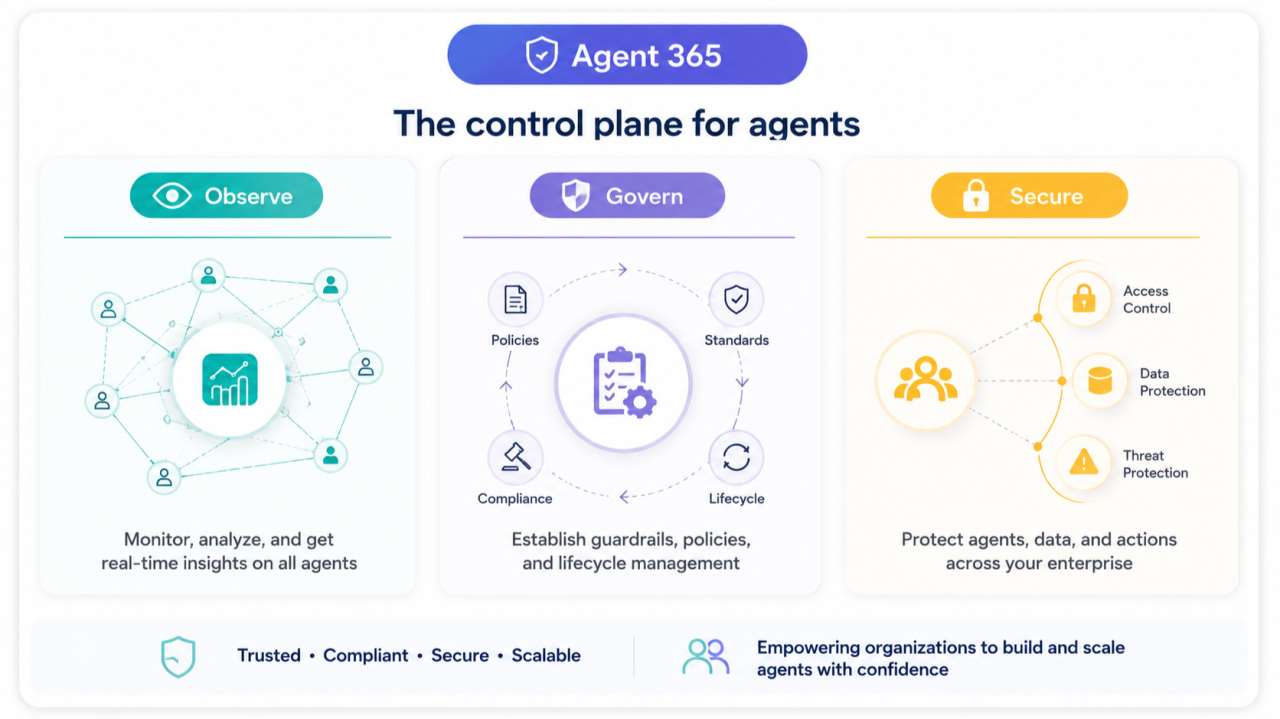
Many teams treat governance as the brake on AI. In our experience it works the other way. When security, legal and business owners agree up front on what agents may do, each new project stops being a fresh debate. Approvals get shorter. Pilots reach production. The security team becomes a partner instead of a gate.
That is what we mean by AI adoption your security team will actually approve.
The goal is not more process. It is fewer surprises.
What a lightweight governance layer looks like
It does not need a committee or a hundred page policy. A practical starting point has five parts:
An agent register. One list of every agent in use, with its purpose, owner, data sources and the date it was last reviewed.
Tiers by risk. Agents that only read public or low risk content move quickly. Agents that touch customer data, money or decisions about people get a closer review.
Access rules. Agents get the least access that lets them do the job, and access is reviewed when the job changes.
Human checkpoints. Defined points where a person approves an action before it happens, based on the tier.
A review rhythm. A short, regular check of the register to retire agents nobody uses and catch the ones that drifted.
Where to start this month
Start with what you can see. List the agents that already exist, including the ones built by individual teams. Name an owner for each. Sort them into two or three risk tiers. Then decide which one decision, such as who can publish an agent to the whole company, you want settled before the next one ships.
You will learn more from that exercise in a week than from months of planning.
If you want help
Trident helps organizations put this layer in place alongside their Microsoft 365 Copilot, ChatGPT Enterprise and Claude Enterprise rollouts, without slowing the work down. See our agent governance service or book the free consultation. You can also read the shorter original on LinkedIn.

Ross Ghiasi
Founder and practice lead at Trident Consulting Group. Former Microsoft. Writes about practical, governed AI adoption.